
SnapLogic
Connect your data, apps, APIs, and AI in one unified platform.
What is SnapLogic?
SnapLogic is a comprehensive integration platform designed to unify data, applications, APIs, and AI into a single cohesive environment, addressing the complexities of modern business processes. It brings together disparate systems and data sources, allowing organizations to streamline their operations through automation and efficient data management, thereby enhancing both productivity and decision-making capabilities. By breaking down silos and simplifying workflows, SnapLogic enables businesses to scale their operations effectively and agilely, responding to changing market demands and promoting innovation.
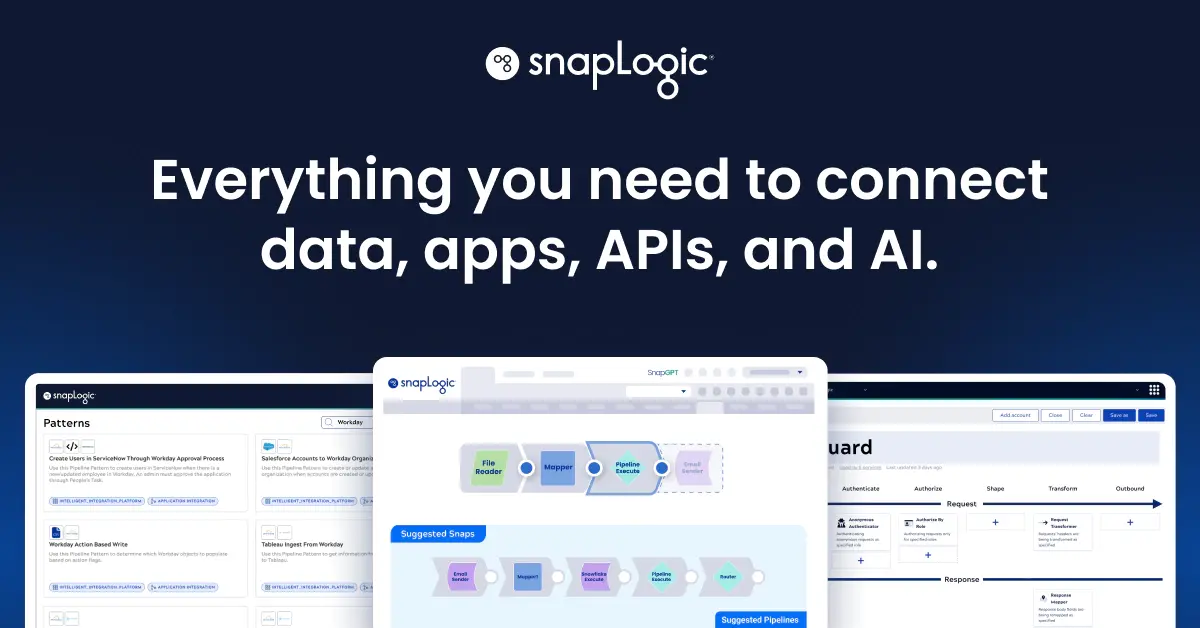
The platform operates on a no-code/low-code model, which empowers users to build and deploy integrations without extensive technical expertise. At its core are visual pipelines that can seamlessly execute data integration, application integration, and API management tasks. SnapLogic leverages pre-built connectors known as 'Snaps', allowing users to connect various applications and services quickly. With features like AutoSync for easy ELT (Extract, Load, Transform) and SnapGPT, which acts as an integration co-pilot, users can intuitively design workflows that automate repetitive tasks and enhance data accessibility.
Among SnapLogic's standout capabilities are its adaptability across various use cases and industries. This platform can handle complex integrations involving numerous applications, whether they are on-premises or cloud-based, ensuring that organizations can mobilize their data effectively. SnapLogic supports enterprises in sectors such as financial services, healthcare, technology, and education, facilitating specific tasks like employee onboarding, invoice processing, and integrating AI into workflows. Its robust API management tools further allow organizations to publish, manage, and secure their APIs, unlocking new growth opportunities.
Typical users of SnapLogic include IT professionals, data engineers, and business analysts who seek to foster innovation within their organizations by automating everyday tasks and creating intelligent agents. The tool is particularly beneficial for organizations undergoing digital transformation and looking to operationalize AI across different functions. By providing a unified platform, SnapLogic encourages 'citizen developers' to create and manage their applications, thereby driving a culture of innovation throughout the enterprise.
In comparison to other integration tools, SnapLogic is recognized as a leader in market research by firms like Gartner and Forrester, positioning itself as a top solution for organizations looking for a balance of ease of use and extensive functionality. Its vision as an all-in-one platform highlights its strategic advantage over traditional integration methods that may require extensive coding or siloed solutions. However, potential users should consider the level of customization they require, as more complex scenarios could demand deeper technical knowledge, which may escalate the learning curve.
Despite its robust feature set and positive feedback from users, SnapLogic does have limitations. Some users may find that initial setup and configuration could require more time compared to simpler integration solutions, particularly when dealing with legacy systems or unique organizational needs. Additionally, while the no-code aspects of the platform reduce the barrier to entry, those seeking highly customized integrations may need to invest time in training and development to fully leverage SnapLogic's capabilities. Organizations should weigh the trade-offs between speed, scalability, and customization based on their specific requirements.
Who it's for
What SnapLogic can do
8 capabilities, verified from the product.
- Data integration through visual pipelines
- No-code/low-code integration design
- Pre-built connectors (Snaps) for fast integration
- AutoSync feature for easy ELT processes
- API management with security and scalability features
- Integration co-pilot (SnapGPT) for user guidance
- Support for enterprise automation and AI integration
- Customizable workflows for various business needs
Jobs people hire it for
- 01Integrate and automate employee onboarding processes
- 02Streamline invoice processing across departments
- 03Enhance real-time data accessibility for analytics
- 04Facilitate API management and security across services
- 05Automate repetitive tasks to increase operational efficiency
Pros & cons
Where it shines
- Comprehensive platform for data, application, and API integration
- User-friendly no-code/low-code capabilities enhance accessibility
- Thousands of pre-built connectors significantly speed up integration
- Robust support for enterprise automation and scaling
- Recognized leader in the market for user experience and innovation
Where it falls short
- Initial setup may require significant time investment
- Complex integrations may necessitate deeper technical expertise
- May not fully meet the needs of highly customized integration scenarios
- Users might experience a learning curve with advanced features
Pricing
See the official website for current pricing. Pricing can change — always confirm on the vendor's site.
Frequently asked about SnapLogic
What is SnapLogic?
SnapLogic is an all-in-one integration platform designed to connect data, applications, APIs, and AI. It simplifies complex business processes by allowing organizations to automate workflows and seamlessly integrate diverse systems in a single environment.
How does SnapLogic help with data integration?
SnapLogic facilitates data integration through visual pipelines that break down silos and mobilize data across cloud and on-premises systems. Its AutoSync capability makes ELT processes easier, helping organizations manage their data effectively and rely on accurate information.
What industries can benefit from SnapLogic?
SnapLogic serves various industries, including financial services, healthcare, technology, and education. It enables specific use cases such as employee onboarding, invoice processing, and automating operational workflows across these sectors.
Is SnapLogic user-friendly for non-technical users?
Yes, SnapLogic features a no-code/low-code interface that empowers non-technical users to create and administer integrations without extensive coding knowledge. This helps democratize integration tasks across enterprise roles.
Are there any limitations to using SnapLogic?
While SnapLogic is feature-rich, some users may find that initial setup and complex integrations require significant time and expertise. Additionally, the platform's more advanced features might involve a learning curve to fully utilize its capabilities.
Does SnapLogic offer any support for API management?
Yes, SnapLogic includes comprehensive API management features that allow users to publish, manage, and secure their APIs within a single platform. This enables businesses to unlock new ways to connect and grow through effective API governance.
What tools does SnapLogic integrate with?
The specific integration capabilities of SnapLogic are extensive, featuring thousands of pre-built connectors (referred to as 'Snaps'). However, the exact integrations were not detailed on the page.
How scalable is SnapLogic for enterprise needs?
SnapLogic is designed to support enterprise automation and scaling, making it suitable for organizations looking to enhance their operational efficiency as they grow. Its architecture is built to handle complex processes and large volumes of data.
Ready to try SnapLogic?
2,370 people checked it out on the directory — see it in action on the official site.
Keep exploring
Similar tools in Data & Analytics
 Data & Analytics
Unlearn
Streamlining clinical trials with AI and digital twins of patients.
 Data & Analytics
ora
Evaluate your business's readiness for AI agents across multiple layers.
 Data & Analytics
crawler.sh
Local Markdown Extractor for AI Training and RAG
 Data & Analytics
Gong Revenue AI OS
AI-powered platform for enhancing sales team efficiency and effectiveness.