
Shield AI
Building the world's best AI pilots and next-generation aircraft.
- Views
- 1,891
- Upvotes
- 176
- Launched
- —
What is Shield AI?
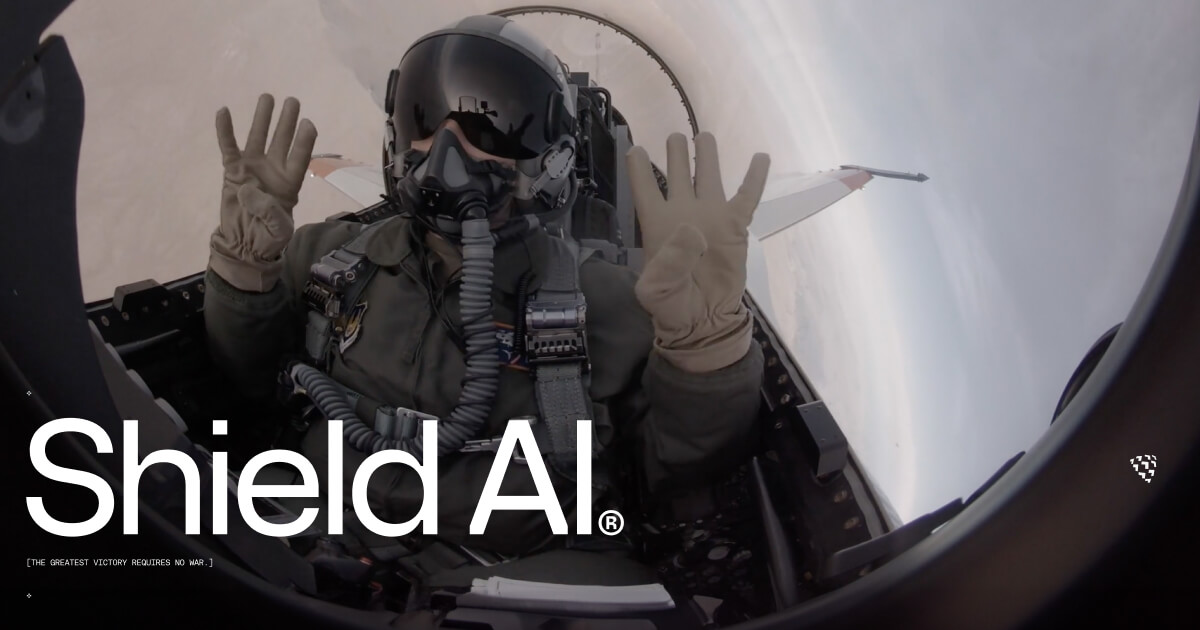
Shield AI is a pioneering defense technology company focused on developing advanced autonomous systems primarily for military applications. The core mission of Shield AI is to protect service members and civilians through intelligent systems that enhance mission effectiveness. Their innovative solutions leverage artificial intelligence to deliver unprecedented levels of autonomy in air operations, ensuring safer, more efficient missions even in the most challenging environments.
At the heart of Shield AI’s capabilities lies their Hivemind platform, which is designed to empower various aircraft, such as the X-BAT and V-BAT, by enabling them to operate independently or in conjunction with human operators. This platform brings together sophisticated algorithms and machine learning techniques to create what they confidently assert as the world's best AI pilots. With mission autonomy serving as a pillar of their technology, Shield AI equips platforms to handle the complexities of modern warfare, where traditional control methods may be hindered or compromised.
The functionality of Shield AI’s systems is critical during operations in contested areas, where loss of communication can render a manual approach futile. The autonomous capabilities provided by Hivemind allow aircraft to execute complex missions without direct human input, maintaining effectiveness despite battlefield uncertainties. The emphasis on resilient autonomy means that when communication fails or operators are overwhelmed, the systems continue executing their objectives reliably. This level of independence potentially reduces risks to personnel and improves the success rates of critical missions.
Unique to Shield AI are two primary aircraft: the X-BAT, which is designed as a robust platform for varied operational scenarios, and the V-BAT, which specializes in Intelligence, Surveillance, and Reconnaissance (ISR) and targeting on Electronic Warfare (EW) battlefields. Both aircraft exemplify the sophisticated capabilities that Shield AI brings to the table, with designs that prioritize aerodynamic efficiency and advanced sensor integration for enhanced situational awareness.
Shield AI is structured to support a diverse range of customers, primarily consisting of defense organizations, government entities engaged in national security, and potentially allied foreign military partners. Typical use cases encompass tactical operations requiring high-stakes ISR capabilities, mission planning where human support is unavailable, and any scenario needing rapid adaptability to evolving conditions on the battlefield. The company actively seeks to expand its relationships with defense contractors and military branches to demonstrate their technologies in real-world applications.
While Shield AI is distinct in its specialized niche within the broader autonomous systems landscape, limitations do exist. Given the gravity of defense and security applications, the path to broader adoption may be hindered by regulatory scrutiny, the necessity for rigorous validation procedures, and the general hesitance surrounding military applications of AI technologies. Furthermore, the high level of specialization in the products may lead to significant barriers for entry for other sectors not directly involved in defense, making it critical for prospective customers to comprehend the full scope of technological capabilities before integration efforts begin.
Who it's for
What Shield AI can do
8 capabilities, verified from the product.
- Advanced AI pilot technology
- Hivemind platform for mission autonomy
- Autonomous operation in contested environments
- Specialized ISR and targeting capabilities
- Multiple aircraft integration options
- Robust aerial platform designs
- Real-time operational adaptability
- Support for military and defense applications
Jobs people hire it for
- 01Conduct ISR missions in high-risk environments
- 02Execute autonomous operations without manual control
- 03Enhance safety and efficiency in military air operations
- 04Provide real-time intelligence during combat scenarios
- 05Support decision-making under communication duress
Pros & cons
Where it shines
- Cutting-edge technology focused on defense applications.
- Specifically designed for autonomy in challenging conditions.
- Strong emphasis on enhancing service member safety and efficiency.
- Integration of advanced sensor technologies in their aircraft.
- Robust support for mission planning and execution.
Where it falls short
- Limited to military and defense applications only.
- Regulatory scrutiny may slow wider adoption.
- High barriers to entry for sectors outside defense.
- Potential for significant validation time before deployment.
- Niche focus may not appeal to broader market needs.
Pricing
See the official website for current pricing. Pricing can change — always confirm on the vendor's site.
Frequently asked about Shield AI
What products does Shield AI offer?
Shield AI offers advanced autonomous systems, primarily the Hivemind platform, along with specialized aircraft like the X-BAT and V-BAT designed for military applications.
How does Shield AI enhance mission effectiveness?
By providing autonomy through its Hivemind technology, Shield AI enables aircraft to execute missions independently, ensuring operations continue effectively even under challenging conditions.
Who are Shield AI's primary customers?
Shield AI primarily serves military organizations, defense contractors, and government agencies focused on national security and military operations.
What makes Hivemind unique?
Hivemind is positioned as the world's best AI pilot system, utilizing sophisticated algorithms to adapt to mission requirements and ensure robust operational autonomy.
Are there any limitations to Shield AI's products?
Yes, the focus on military applications may limit adaptability for civilian use and might face regulatory and validation hurdles before broader deployment.
How can potential clients learn more or get demos?
Potential clients can reach out to Shield AI directly through their website to schedule demonstrations and inquire about available solutions.
What is the mission of Shield AI?
Shield AI's mission is to protect both service members and civilians by developing intelligent systems that enhance safety and operational efficiency in defense contexts.
Ready to try Shield AI?
1,891 people checked it out on the directory — see it in action on the official site.
Keep exploring
Similar tools in Coding & DevTools
 Coding & DevTools
Cursor
The AI-first code editor — chat with your codebase and let agents write multi-file changes.
 Coding & DevTools
GitHub Copilot
Your AI pair programmer — code completions, chat, and agents inside your editor.
 Coding & DevTools
v0
Vercel's AI that turns prompts into production-ready React and Next.js UI.
 Coding & DevTools
E2B
The Enterprise AI Agent Cloud for secure AI workflows