
ROK
Organization-centric hyperautomation platform for seamless integration and security.
What is ROK?
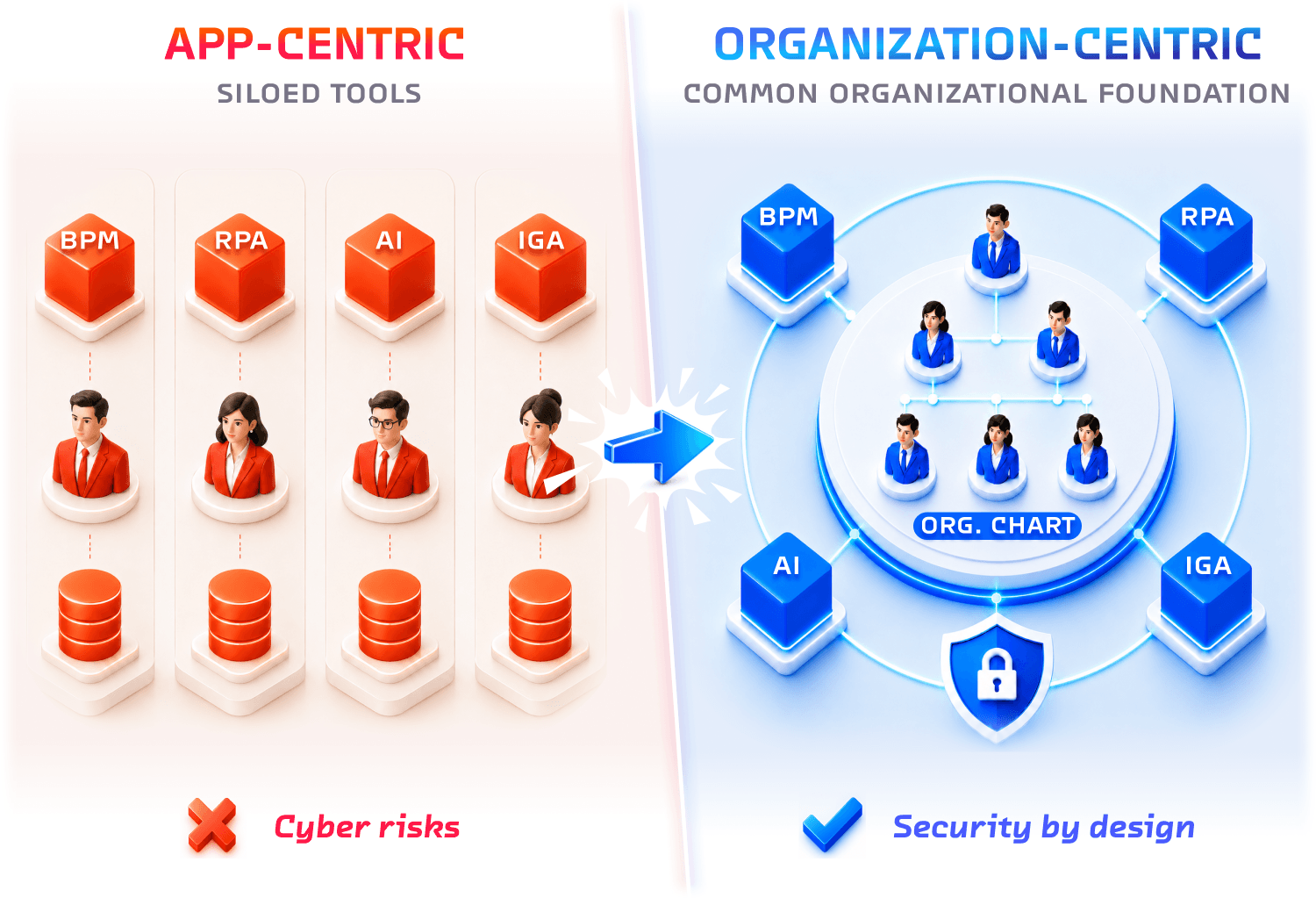
ROK is an innovative hyperautomation platform that redefines the approach to enterprise processes by centering on the organization rather than the applications themselves. Unlike traditional tools that often function in isolated silos, ROK integrates a living organizational chart at its core, synchronized with existing HRIS and directories. This allows organizations to streamline task management, enhance security, and improve compliance in a way that is inherently aligned with their operational structure. By embedding security directly into its architecture and operations, ROK provides a structured, compliant environment that minimizes the risk of security breaches, a vital concern in today's digital landscape.
The platform operates on three main pillars: orchestration, creation, and security. Through its orchestrate functionality, ROK maintains a real-time, multi-axis organizational chart that is the backbone of process and access rights management. This chart not only reflects the hierarchical structure of the organization but integrates it with the roles, responsibilities, and compliance needs inherent to the organization. With ROK’s create capabilities, users can leverage no-code solutions alongside generative AI to automate workflows and business applications tailored to their specifications. This feature empowers teams to focus on agility and innovation without losing oversight. Security, embodied through ROK’s native Identity Governance and Administration (IGA), ensures that access rights are governed by the organizational chart, eliminating orphaned access rights and ensuring compliance from the outset.
One of ROK's significant innovations is its approach to hyperautomation, combining Business Process Management (BPM), Robotic Process Automation (RPA), and no-code development within a single, cohesive environment. This dramatically reduces the complexity typically associated with managing multiple tools and platforms, offering a more straightforward solution to organizations looking to transform their operations. The advanced rules engine allows for a sophisticated flow management system that adapts based on actual organizational context, thus enhancing responsiveness and control. Furthermore, ROK's architectural security means that all applications and automations inherit governance directly from the organization, reducing the risk of data exposure and compliance failures.
ROK is particularly well-suited for complex, multi-entity organizations that require a high degree of automation while maintaining rigorous control over security and compliance. Suitable users span a variety of sectors, from banking with clients like HSBC to various service providers and manufacturing giants like Novares. The platform’s unique selling point lies in its ability to model various organizational structures, making it versatile for a wide range of business processes, ensuring that whether businesses are automating onboarding, managing supplier relations, or conducting audits, everything is intrinsically connected to their organizational reality.
In comparison to traditional automation solutions that merely connect disparate applications, ROK’s organization-first philosophy allows it to eliminate silos at their base. This minimizes the common pain points of traditional enterprise software deployment, which often leads to fragmented data and a lack of inter-application coherency. A significant limitation to consider is that, while ROK offers substantial advantages in terms of integration and governance, its effectiveness is directly linked to the quality of the existing HR data and organizational structure. Should this data be outdated or poorly maintained, the system's effectiveness may be compromised, necessitating a thorough review of current data before implementation.
Who it's for
What ROK can do
8 capabilities, verified from the product.
- No-code application creation
- Native identity governance and administration
- Automated employee journey management
- Integration with existing HRIS and directories
- Advanced rules engine for flow management
- Multi-agent architecture with controlled AI
- Real-time monitoring and KPIs
- Dynamic organizational chart management
Jobs people hire it for
- 01Automate employee onboarding and offboarding processes
- 02Integrate HR access management with organizational data
- 03Create custom applications for specific business needs
- 04Implement compliance workflows for regulatory standards
- 05Manage supplier relationships and external partner access
Pros & cons
Where it shines
- ROK eliminates silos by integrating all processes within the organization structure.
- The platform's no-code approach enables faster application development without needing deep technical skills.
- Generative AI enhances automation efficiency, turning business needs into operational applications quickly.
- Architectural security ensures that governance is built into the platform, not bolted on later.
- Seamless integration with existing systems helps maintain continuity while improving automation.
Where it falls short
- Initial implementation may require significant changes to existing organizational data and processes.
- The effectiveness of ROK relies heavily on the accuracy of the organizational structure in the HRIS.
- Users may face a learning curve when transitioning to this comprehensive platform from traditional siloed tools.
- Pricing and specific deployment costs are not detailed, which may hinder budgeting discussions.
- Some organizations may be hesitant to move to a no-code environment due to concerns about governance. Onboarding business teams might require additional training.
Pricing
See the official website for current pricing. Pricing can change — always confirm on the vendor's site.
Frequently asked about ROK
What differentiates ROK from other automation platforms?
ROK differentiates itself by starting from the organization rather than individual applications. It builds processes and access rights around the real organizational chart, allowing for a more cohesive and integrated approach to automation.
How does ROK handle security concerns typically associated with no-code development?
ROK integrates security directly into its architecture, ensuring that every application inherits governance from the organizational structure. This minimizes security risks associated with ungoverned no-code tools.
Can existing applications be integrated with ROK?
Yes, ROK does not require organizations to discard existing applications. It can integrate with current systems such as HRIS, ERP, and CRM, allowing businesses to enhance their processes without overhauling their entire information system.
What types of organizations can benefit most from using ROK?
ROK is especially beneficial for complex organizations with multiple sites and entities, such as those operating in regulated industries. Its design accommodates intricate structures and enables effective governance and compliance.
How does ROK ensure compliance with regulatory standards?
ROK provides compliance by design, meaning that compliance features are built into workflows and processes from the start, aiding in adherence to regulations like GDPR and ISO 27001.
What role does IT play with the ROK platform?
ROK reinforces the role of IT in governance, granting IT oversight while allowing business teams to create applications. This collaborative approach ensures that security and compliance are respected while encouraging innovation.
How does ROK facilitate the employee journey management?
ROK automates critical processes such as onboarding, mobility, and offboarding by linking them directly to the organizational chart, allowing access rights to adapt seamlessly with organizational changes.
How does ROK utilize generative AI?
Generative AI within ROK aids in accelerating the application development process, helping transform business requests into functional applications while maintaining governance through the organizational chart.
Ready to try ROK?
1,404 people checked it out on the directory — see it in action on the official site.
Keep exploring
Similar tools in Coding & DevTools
 Coding & DevTools
Cursor
The AI-first code editor — chat with your codebase and let agents write multi-file changes.
 Coding & DevTools
GitHub Copilot
Your AI pair programmer — code completions, chat, and agents inside your editor.
 Coding & DevTools
v0
Vercel's AI that turns prompts into production-ready React and Next.js UI.
 Coding & DevTools
E2B
The Enterprise AI Agent Cloud for secure AI workflows