
What is Meshy?
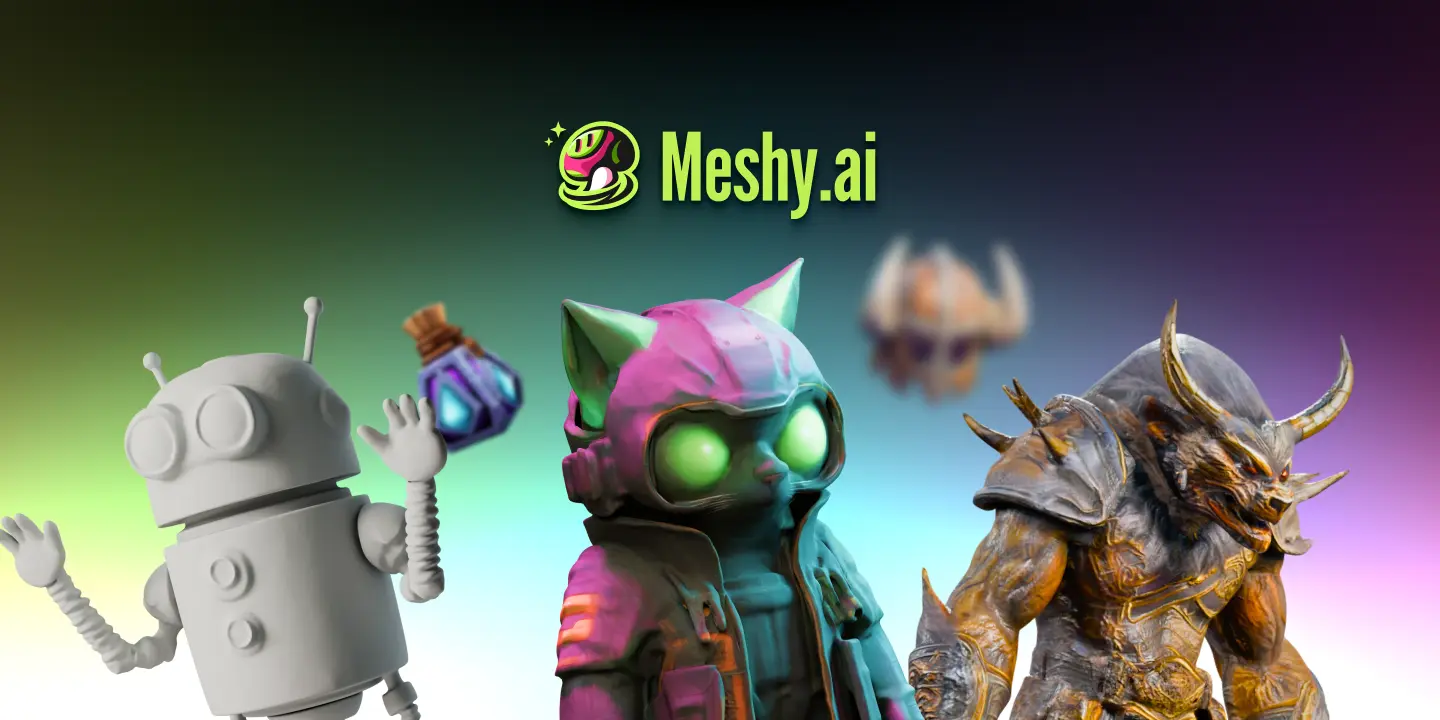
Meshy is an innovative AI-driven 3D model generator that enables users to create high-quality 3D models from text or images in a matter of seconds. This tool expertly bridges the gap between conceptualization and production, allowing designers, game developers, educators, and hobbyists to bring their ideas to life quickly and efficiently. With a focus on printability and usability in a range of applications, Meshy stands out in the competitive landscape of 3D modeling tools, providing valuable features that cater to various creative needs.
The core functionality of Meshy revolves around its ability to take either a textual description or an image input to generate an intricate 3D model. For instance, users can upload photographs, sketches, or concept art as references, and within 20-30 seconds, Meshy processes these inputs, presenting a ready-to-use model. This efficiency is particularly beneficial for individuals needing rapid prototyping, such as game developers and 3D printing enthusiasts. Furthermore, the platform supports exporting models in numerous formats, including FBX, OBJ, GLB, and STL, which grants flexibility in application based on project requirements.
One of Meshy's standout features is its commitment to printability. Unlike many AI 3D generators that produce models needing manual cleanup, Meshy generates watertight and manifold models that are often ready to slice without further adjustments. Every exported model undergoes a printability check that automatically repairs potential issues, significantly reducing the time and effort required in preparing a model for 3D printing. Meshy also provides auto-splitting capabilities for complex designs, arranging components properly for multi-color printing, which is essential for achieving high-quality results in 3D printing.
This platform isn't restricted to just individual asset generation; it enables users to create entire environments or game worlds. Meshy includes features like one-click PBR (physically based rendering) texturing, which generates complete texture sets without the need for extensive shader setups. Furthermore, it offers auto-rigging for humanoid and quadruped models, with an extensive library of motion presets for animations, making it highly valuable for game developers looking to prototype characters and environments quickly. With its compatibility with major engines like Unity, Unreal Engine, and development tools like Blender and Maya, Meshy easily integrates into existing workflows.
Meshy caters to a diverse range of users, from indie game developers and tabletop RPG creators to educators and industrial designers. This versatility is demonstrated through various use cases, including 3D modeling for education, VR/AR experiences, film and visual effects, and more. Its capability to produce miniature models from user-drawn sketches enhances its appeal in educational contexts, where students can visualize their creative concepts rapidly. Meshy's user base has grown significantly, with over 10 million users generating upwards of 100 million models, showcasing its popularity and efficacy.
While Meshy offers a rich set of features, certain limitations must be considered. Users may find that the quality of generated models can vary depending on the specificity and clarity of the input text or images. Additionally, while the platform provides a free tier for users to explore, there may be unknown restrictions on advanced features that could be available only in a paid plan. It is recommended that prospective users assess how these limitations may align with their project goals and their expected output requirements for 3D modeling.
Who it's for
Works with
What Meshy can do
8 capabilities, verified from the product.
- Fast generation from text or images
- Supports FBX, OBJ, GLB, STL exports
- Watertight and manifold model outputs
- One-click PBR texturing generation
- Auto-rigging for humanoid and quadruped models
- Rigging with 600+ motion presets
- Low Poly mode for optimal performance
- Direct integration with major 3D printing software
Jobs people hire it for
- 01Create detailed 3D models for games
- 02Generate prototypes for 3D printing
- 03Develop educational materials in 3D
- 04Design characters for tabletop RPGs
- 05Produce assets for virtual reality applications
Pros & cons
Where it shines
- Extremely fast model generation process.
- High-quality print-ready models with minimal cleanup.
- Integration with popular game engines and slicers.
- User-friendly interface with AI chat assistance.
- Versatile application across various creative fields.
Where it falls short
- Model quality can be inconsistent with vague inputs.
- Unknown limitations on some advanced features in free tier.
- May require learning curve for first-time users.
- Dependence on internet for model generation; no offline mode available.
- Export options may not support all specific requirements.
Pricing
Free tier available; advanced features may require subscription plans. Pricing can change — always confirm on the vendor's site.
Frequently asked about Meshy
What is Meshy and what does it do?
Meshy is a powerful AI 3D model generator that allows users to create detailed 3D models from text descriptions or images in under a minute. It is designed for users in various sectors, including game development, education, and 3D printing. The platform ensures models are production-ready, helping streamline the creative process.
How do I export models from Meshy?
Models generated in Meshy can be exported in several formats such as FBX, OBJ, GLB, and STL. This allows for use across different applications and tools, including 3D printing software and game engines like Unity and Unreal Engine.
What is the printability feature of Meshy?
Meshy ensures that the 3D models it generates are watertight and manifold, meaning they are optimized for 3D printing without requiring extra cleanup. The platform includes a printability check that automatically repairs any issues before slicing, ensuring the models are ready to print.
Can I use Meshy for game asset creation?
Yes, Meshy is particularly suited for creating game assets. It supports auto-rigging for characters and provides a library of motion presets, making it ideal for game developers looking to prototype characters and environments efficiently.
Is Meshy free to use?
Meshy offers a free tier that allows users to generate 3D models without needing to provide credit card information. However, certain advanced features might require subscription plans.
What types of users benefit from Meshy?
Meshy caters to a diverse audience, including game developers, 3D artists, educators, and hobbyists. Its user-friendly interface and robust feature set make it suitable for anyone looking to create 3D models quickly.
What limitations should I be aware of?
While Meshy offers numerous benefits, users may experience inconsistencies in model quality based on input clarity and specificity. There are also potential unknown limitations for advanced features in the free tier.
Ready to try Meshy?
1,281 people checked it out on the directory — see it in action on the official site.
Keep exploring
Similar tools in Image Generation
Midjourney
The image generator artists reach for — stunning, stylized visuals from text prompts.
 Image Generation
Stable Diffusion
The open-source image model you can run, fine-tune, and ship anywhere.
Ideogram
Text-to-image generation that actually nails typography, logos, and text inside images.
 Image Generation
AI Photo Filter
Transform your photos into unique artworks with AI filters.